The real estate market is becoming more competitive every year. Agencies must manage leads, client relationships, property listings, and sales pipelines efficiently to stay ahead.
A modern Customer Relationship Management (CRM) system helps real estate businesses streamline operations, automate repetitive tasks, and close deals faster.
In 2026, advanced CRM platforms include automation, AI-powered insights, predictive analytics, and marketing integrations, helping real estate teams operate smarter and scale faster.
Companies working with Meta Lean can implement highly customizable CRM environments designed specifically for real estate workflows.
Why Real Estate Businesses Need a CRM
Real estate professionals handle hundreds of leads, conversations, and transactions simultaneously. Without a CRM system, tracking follow-ups, communication, and opportunities becomes difficult.
A real estate CRM helps agents and agencies:
Organize and store client information
Track property listings and buyer preferences
Automate lead follow-ups
Manage sales pipelines
Improve customer experience
Monitor deal progress and team performance
These capabilities improve conversion rates, operational efficiency, and client satisfaction.
Key Features to Look for in a Real Estate CRM
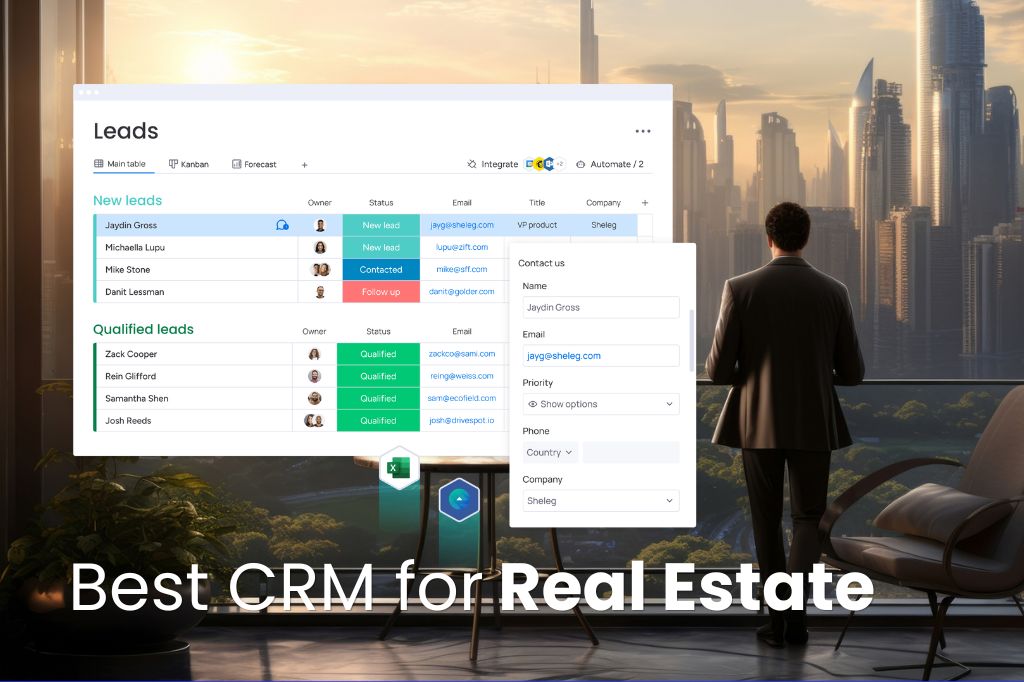
1. Lead Management
Real estate leads come from multiple sources, including:
Website forms
Property listing portals
Social media campaigns
Referral networks
Paid advertising
A strong CRM should allow teams to:
Capture leads automatically
Assign leads to specific agents
Track calls, emails, and interactions
Prioritize high-intent prospects
Advanced systems even use AI lead scoring to identify prospects most likely to convert.
2. Automated Follow-Ups
Speed matters in real estate. Delayed responses can cause agents to lose potential buyers.
CRM automation helps agents:
Send automated email follow-ups
Trigger SMS or WhatsApp messages
Schedule task reminders
Receive instant lead notifications
Automation ensures consistent engagement with prospects, increasing the chances of closing deals.
3. Sales Pipeline Tracking
A CRM provides clear visibility into the entire sales pipeline.
This allows real estate teams to:
Track buyers from first inquiry to closing
Identify stalled or inactive deals
Forecast future revenue
Monitor agent performance
Visual pipelines help teams make data-driven decisions and improve deal conversion rates.
4. Property and Client Data Management
Modern CRM platforms combine property data and client information in one centralized system.
Key capabilities include:
Property listing databases
Detailed client profiles
Document and contract storage
Deal progress tracking
Transaction management
Centralized data improves collaboration between agents, brokers, and managers.
5. Marketing and Communication Integrations
Real estate CRMs work best when integrated with marketing tools.
Important integrations include:
Email marketing platforms
Property listing portals (MLS)
Social media channels
Advertising platforms
Website lead capture forms
Multi-channel communication helps agents engage clients through email, messaging apps, and social media from one platform.
Why Custom CRM Solutions Are Growing in Popularity
Every real estate company has unique workflows, team structures, and sales processes.
Custom CRM systems allow agencies to build platforms tailored to their business model.
With a customized CRM implementation, companies can:
Align CRM workflows with internal operations
Automate repetitive administrative tasks
Generate real-time reporting and analytics
Improve team collaboration
Scale operations as the agency grows
Working with Meta Lean, real estate companies can implement fully customizable CRM environments that support their exact operational requirements.
Best Real Estate CRM Platforms in 2026
Popular CRM platforms used by real estate professionals include:
Follow Up Boss – excellent for lead conversion and automation
Freshsales CRM – strong automation and AI capabilities
Realvolve CRM – advanced workflow automation for real estate teams
These platforms offer tools like lead routing, automated campaigns, analytics dashboards, and mobile CRM access.
The Future of Real Estate CRM
Real estate CRM technology continues to evolve rapidly. In the coming years, platforms will increasingly include:
AI-powered lead scoring
Predictive sales analytics
Advanced workflow automation
Mobile-first CRM dashboards
3D virtual tour integrations
WhatsApp and messaging automation
These technologies help agents respond faster, understand client behavior, and deliver personalized property recommendations.
Conclusion
Adopting the right CRM solution is essential for real estate businesses that want to stay competitive in a rapidly evolving market.
With a powerful CRM, agencies can:
Manage leads efficiently
Automate communication
Improve sales pipeline visibility
Strengthen client relationships
Through modern CRM platforms and expert implementation from Meta Lean, real estate companies can streamline operations, increase productivity, and ultimately close more property deals.